Corsetry is far more than a passing fashion trend; it is an architectural art form for the human body. From the courtly opulence of the Renaissance to the high-fashion runways of Milan and Paris, corsets have remained the ultimate tool for self-expression, confidence, and silhouette enhancement. Today, the modern women’s corset top has evolved from a restrictive undergarment into an empowering wardrobe staple. It effortlessly bridges the gap between classic romance and edgy, contemporary streetwear, offering anyone the ability to define their waist and elevate their personal style.
However, walking into the world of corsetry can feel overwhelming. With an array of styles ranging from structural overbusts to minimalist underbusts, coupled with varying materials like breathable cotton, sleek satin, and rich leather, finding the perfect match requires strategy. The secret to looking and feeling like a goddess in a corset does not lie in changing your body—it lies in understanding your unique body shape. When you choose a corset designed to harmonize with your natural geometry, you unlock a level of comfort, support, and visual balance that standard clothing simply cannot replicate.
To truly master the art of styling, one must look at a women’s corset top not just as an item of clothing, but as a structural frame. Just as an architect considers the foundation of a building, you must consider how the lines, boning, and cut of a corset interact with your shoulders, waist, and hips. Whether your goal is to accentuate a naturally defined waist, create the illusion of curves where they are softer, or find unparalleled bust support, there is a precision-engineered corset waiting to transform your wardrobe. Let’s dive deep into the mechanics of body shapes and discover your perfect structural match.
Understanding the Foundations: Overbust vs. Underbust Corsets
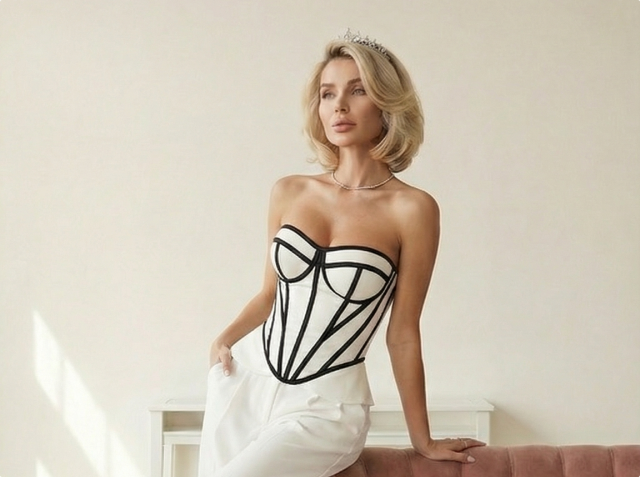
Before mapping corsets to specific body shapes, it is critical to understand the two foundational pillars of corsetry: the overbust and the underbust corset. An overbust corset covers the bust entirely, usually starting under the arms and extending down toward the hips. This style acts as a built-in bra, offering incredible lifting properties and support, making it an exceptional standalone women’s corset top for evening wear or statement outfits. It dictates the line of the entire upper torso, making it a powerful tool for dramatic styling.
On the flip side, the underbust corset begins just beneath the breasts and extends down toward the hips. This style focuses entirely on waist compression and hip flaring, leaving you free to pair it with your favorite blouses, button-downs, or dresses. Underbust models offer immense versatility and are often favored by those who enjoy layering or are new to tight-lacing, as they allow for greater freedom of movement and breathing room for the lungs.
Choosing between these two structural pillars depends largely on your style goals and your comfort preferences. If you desire a dramatic, all-in-one structural piece that commands attention in any room, an overbust women’s corset top is your go-to canvas. If you prefer a modular accessory that can transition from a casual daytime office look (layered over a crisp white shirt) to a sultry nighttime aesthetic, the underbust offers unmatched flexibility. Understanding this distinction is your first step toward structural harmony.
Identifying Your Body Shape: The Geometry of Style
Every individual possesses a distinct skeletal framework and fat distribution pattern that defines their natural silhouette. In the world of fashion and design, we categorize these beautiful variations into five primary shapes: Hourglass, Pear (Triangle), Rectangle (Banana), Apple (Inverted Triangle), and Strawberry. Knowing which category your measurements fall into is not about boxing yourself in—it is about obtaining a roadmap to effortless dressing and proportional balance.
To determine your shape, take a look in a full-length mirror or grab a fabric measuring tape. Compare the width of your shoulders and bust to the width of your natural waist and the fullest part of your hips. Are your shoulders and hips perfectly aligned with a highly defined waist? You are an hourglass. Are your hips noticeably wider than your shoulders? You lean toward the pear shape. Is your torso relatively straight from top to bottom? You are a rectangle.
Once you possess this geometric clarity, selecting a women’s corset top shifts from a game of guesswork to a precise science. Instead of fighting against the natural lines of your body, you can strategically select boning patterns, necklines, and hip cuts that celebrate and enhance your natural form. Let us look at how to pair each specific body shape with its ideal corset counterpart for maximum comfort and visual impact.
1. The Hourglass Body Shape: Accentuating Balanced Proportions
If you possess an hourglass figure, your shoulders and hips are of relatively equal width, and your waist is naturally well-defined. For this body shape, the goal of wearing a women’s corset top is not to create curves from scratch, but rather to highlight and emphasize the stunning symmetry you already possess. The hourglass frame is incredibly versatile, meaning you can pull off almost any corset style with grace.
The absolute best option for an hourglass figure is a classic, naturally contoured overbust corset with a sweetheart or plunge neckline. This cut mirrors the organic curves of your bust line while pulling in the waist, creating a breathtaking, cohesive flow. Look for corsets that feature balanced boning—meaning the structural panels compress evenly across the midsection without flattening the chest or over-extending the hip panels.
When styling a women’s corset top for an hourglass frame, avoid pieces that have overly aggressive flared hips or excessively flat vertical lines, as these can distort your natural symmetry. Instead, opt for luxurious satins or smooth brocades that hug your contours smoothly. Pair your corset with tailored trousers or a pencil skirt to maintain that sophisticated, balanced proportion from head to toe.
2. The Pear Body Shape: Balancing the Hips and Defining the Waist
The pear shape—or triangle silhouette—is characterized by hips that are wider than the bust and shoulders, often accompanied by an elegant, slender neck and a well-defined waistline. When choosing a women’s corset top for a pear shape, the primary objective is to draw the eye upward, create a bit of visual volume around the bust and shoulders, and accommodate the natural curve of the hips without pinching.
For pear-shaped individuals, an overbust corset with dramatic detailing along the neckline is an absolute game-changer. Look for corsets featuring ruffles, lace trim, cowl necklines, or off-the-shoulder sleeves. These design elements add subtle volume to your upper torso, perfectly counterbalancing your fuller hips. Additionally, ensure the corset features high-hip cuts or adjustable side laces, which allow the garment to sit comfortably over your hips without riding up or digging into the skin.
If you prefer an underbust model, pair it with a voluminous peasant blouse or a top with puff sleeves to achieve that same balancing effect on the upper body. A women’s corset top crafted from rich textured fabrics like velvet or heavily embroidered jacquard works wonderfully here, as it anchors the outfit and creates an incredibly regal, structured appearance.
3. The Rectangle Body Shape: Creating the Illusion of Dramatic Curves
If your body shape is rectangular, your bust, waist, and hips are of relatively similar widths, resulting in an athletic, straight silhouette. The magic of a high-quality women’s corset top on a rectangle body shape is truly transformative. Here, the corset acts as a master sculptor, pulling in the midsection to create a striking, hourglass illusion where a natural waist indentation may be less prominent.
To achieve maximum curve creation, rectangle shapes should seek out corsets with aggressive, conical waist reduction and heavily flared hip panels. An overbust corset with a deep, dramatic sweetheart neckline or a structural U-cut works wonders, as it visually breaks up the straight lines of the torso. Look for garments that utilize spiral steel boning, which provides the necessary flexibility to mold your midsection comfortably into a curved silhouette.
Another excellent trick for the rectangle shape is to look for a women’s corset top with contrasting vertical panels or color-blocking designs. Vertical lines that curve inward toward the belly button create a powerful optical illusion of a narrower waist. Pair your corset with a flared A-line skirt or wide-leg palazzo pants to further amplify the dramatic, curved silhouette you’ve just created.
4. The Inverted Triangle Shape: Softening the Shoulders and Supporting the Bust
The inverted triangle body shape features broad shoulders and an ample bust paired with narrower hips and a straight waistline. If this is your silhouette, your goal when choosing a women’s corset top is to provide superior, comfortable support for your chest while visually widening your lower torso to create a balanced, harmonious look.
For this shape, construction quality is paramount. You should look for an overbust corset with an unpadded, straight-across, or gently curved neckline that minimizes the appearance of shoulder width while offering maximum lift. Look for heavy-duty, flat steel boning in the front center to ensure proper bust support, eliminating the need for uncomfortable bra straps. The corset should extend lower past the hip bones, featuring a flared hip panel to add visual weight to your lower half.
Color and fabric choice also play a vital role for the inverted triangle. Opt for a women’s corset top in muted, darker tones for the bodice, but feel free to choose designs that feature flared peplums or lace extensions at the bottom. Styling this piece with cargo pants, layered tiered skirts, or pleated maxi skirts will instantly balance your frame, making you look exceptionally polished and statuesque.
5. The Apple Body Shape: Elongating the Torso and Smoothing the Midsection
The apple body shape is characterized by a fuller midsection, an undefined waist, and a broader torso, often paired with stunningly slender legs and a beautiful bust. When selecting a women’s corset top for an apple shape, the focus shifts toward elongating the torso, providing gentle, vertical smoothing, and drawing attention to your chest and legs.
Apple shapes benefit immensely from corsets that feature a longer front length (often referred to as a longline corset). A longline women’s corset top extends down over the abdomen, providing an unbroken, vertical smoothing effect that visually stretches your upper body. Look for a corset with a steep V-shaped bottom hem (a basque waistline), which points downward and creates an immediate lengthening optical illusion.
Avoid corsets that cut off abruptly at the natural waist, as they can cause discomfort and disrupt the clean lines of your outfit. Instead, choose breathable, high-tension fabrics like cotton corset mesh or heavy satin with vertical boning patterns. When styled over an empire-waist dress or paired with slim-fit trousers that highlight your legs, a well-fitted longline corset provides a spectacular, confidence-boosting structure.
Sizing and Material Selection: The Key to All-Day Comfort
No matter how perfectly a corset matches your body shape, it will not look or feel right if you choose the wrong size or inferior materials. Real, high-fashion corsetry relies on steel boning—both spiral steel for flexibility along the curves and flat steel for rigid support along the spine and front busk. Plastic boning should be avoided at all costs, as it warps, kinks, and digs into the skin after just a few wears, ruining the clean lines of your garment.
When determining your size for a women’s corset top, do not rely on your standard dress size. You must measure your natural waist at its narrowest point (usually an inch above your belly button). For fashion corset tops designed with a laced back, you generally want to select a size that is 2 to 4 inches smaller than your natural waist measurement, depending on how dramatic of a cinch you desire.
Furthermore, consider the textile canvas. Satin offers a glamorous, high-shine finish perfect for evening events; leather or faux-leather adds an edgy, rebellious rock-and-roll vibe; while mesh and cotton brocades offer incredible breathability for everyday layering. Always ensure the lining of the corset is made from 100% cotton twill or Coutil—a specialized, tightly woven fabric that prevents the steel bones from poking through and feels incredibly soft against your skin.
Conclusion
Choosing the right corset is a deeply personal journey of celebrating your unique physical architecture. Whether you are looking to accentuate your natural hourglass symmetry, balance a pear or inverted triangle frame, create dramatic curves on an athletic rectangle, or elongate an apple silhouette, the perfect women’s corset top is the ultimate wardrobe transformative tool. By understanding the interplay between your body shape and structural garment design, you can curate a look that radiates timeless elegance, power, and unapologetic confidence. Explore the meticulously crafted collection at Bustier Brand today, and discover the structural masterpiece engineered just for you.